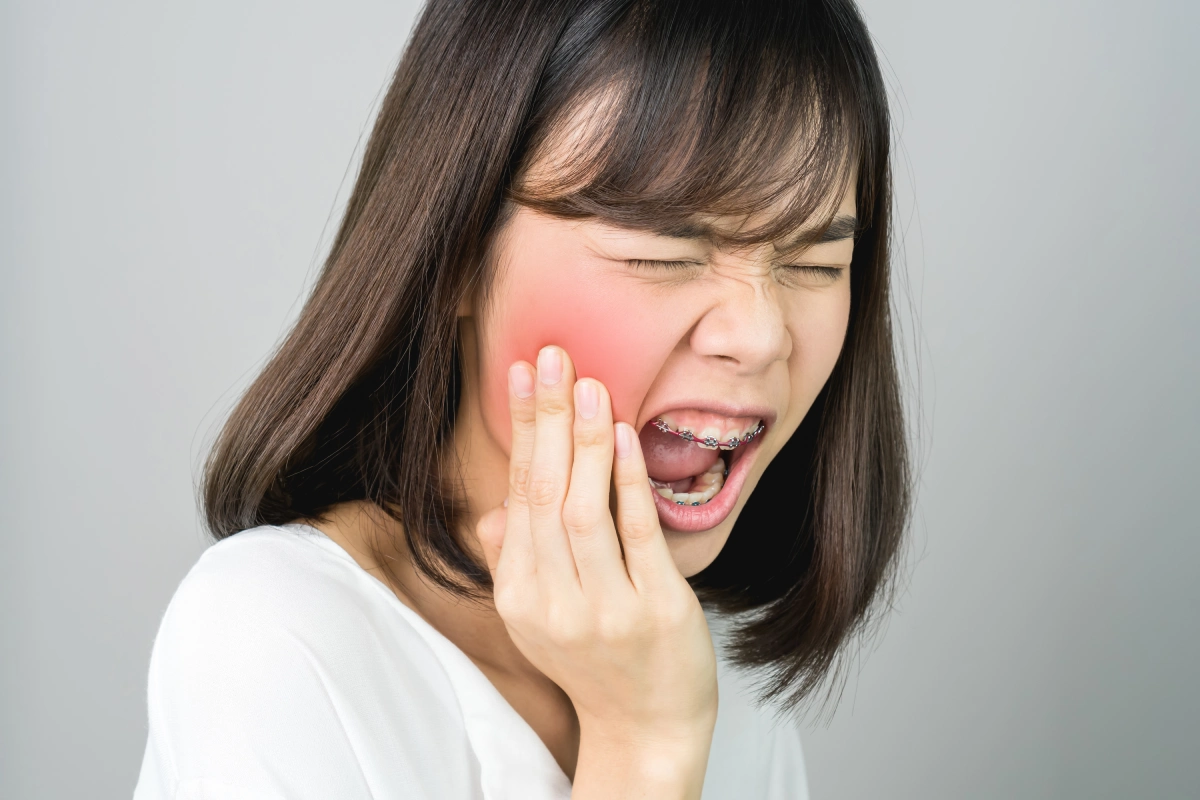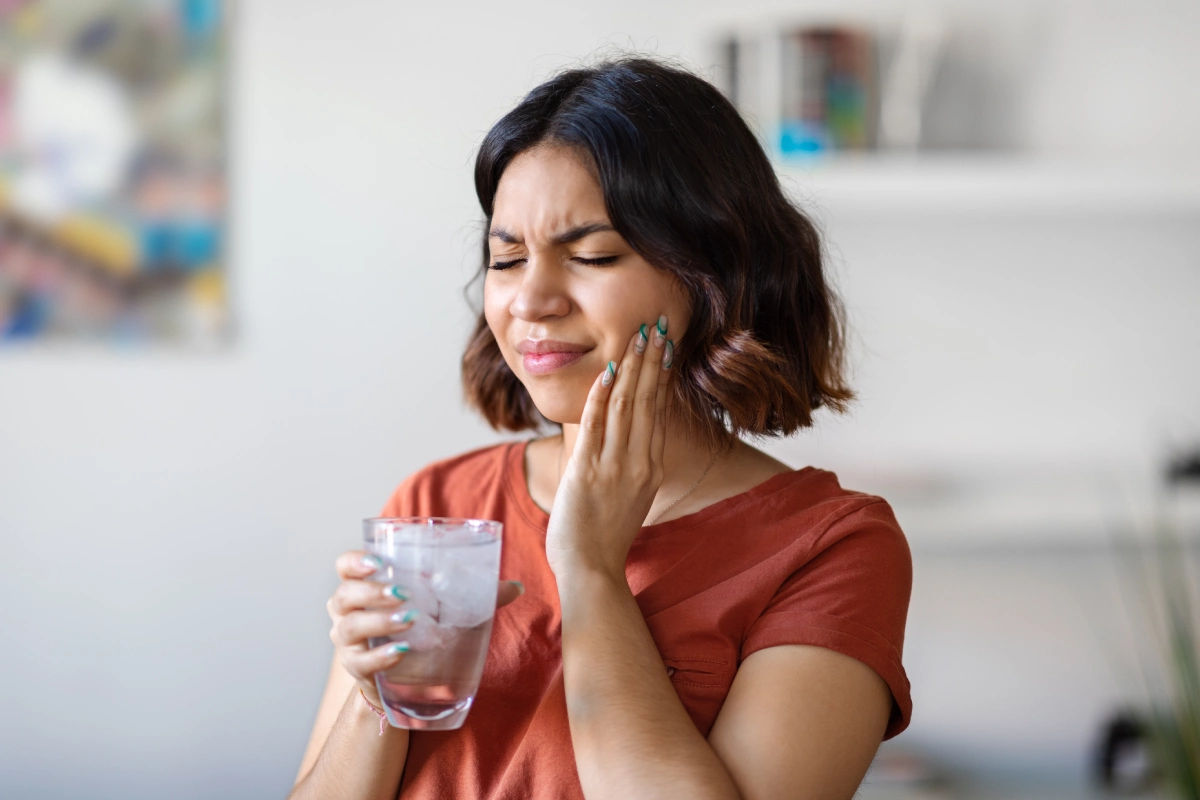
You take a drink of cold water and suddenly one tooth gives you a sharp jolt. A second later, the pain is gone.
That can be confusing, especially when every other tooth feels completely normal. One tooth hurting when drinking cold water does not automatically mean you need a root canal. The timing, intensity, and what happens after the cold is gone can provide important clues about what is happening inside that tooth.
Why Would Just One Tooth React to Cold?
When only one tooth is sensitive, it is worth looking at that tooth rather than assuming you simply have generally sensitive teeth.
A few things can cause this:
- Exposed dentin: If the enamel has worn down or the gum has receded, the sensitive layer underneath can become exposed. Cold water can reach this area and trigger a quick, sharp sensation.
- A cavity: Tooth decay can work its way through the protective enamel and closer to the nerve. Cold sensitivity may be one of the first signs that something is developing.
- A damaged filling: If the tooth has an older filling, sensitivity may develop if the restoration is worn, leaking, or no longer sealing the tooth properly.
- A crack: A tooth can have a small crack without looking obviously damaged. Temperature changes can sometimes trigger pain when the crack allows the inner part of the tooth to respond to the cold.
- Inflammation inside the tooth: When the pulp becomes irritated, the response to cold can become more noticeable and may last longer.
Pay Attention to What Happens After the Sip
This is one of the most useful things you can observe.
If the tooth hurts sharply when the cold touches it but settles almost immediately, the problem may involve exposed dentin or another surface level cause.
But what if you take a sip, swallow, and the tooth keeps hurting after the water is gone?
That is different.
Pain that lingers for several seconds or longer can indicate that the tissue inside the tooth is irritated. It does not diagnose the problem by itself, but it is a good reason to have the tooth examined rather than waiting for the sensitivity to disappear.
The same applies if the tooth starts hurting without anything cold touching it, becomes painful when you bite, or develops a dull ache that keeps returning.
Does Cold Sensitivity Mean You Need a Root Canal?
Not necessarily.
A tooth can react to cold for reasons that do not require treatment of the nerve. Your dentist or an endodontist may examine the tooth, test how it responds to temperature, check your bite, and use dental imaging to determine what is actually happening.
If the pulp inside the tooth is significantly inflamed or infected, root canal treatment may be recommended to remove the affected tissue and preserve the natural tooth.
If you are looking for a dentist who can evaluate unusual tooth sensitivity, specialized evaluation can be particularly useful when the source of the pain is difficult to pinpoint.
What Can You Do Until You Are Examined?
You do not need to repeatedly test the tooth with ice water to see whether it still hurts. That can simply keep irritating an already sensitive area.
Instead:
- Avoid very cold drinks for a while.
- Chew on the opposite side if biting causes discomfort.
- Continue brushing and flossing gently.
- Pay attention to whether the pain lingers after eating or drinking.
- Make note of swelling, spontaneous pain, or increasing sensitivity.
These details can help your dental professional understand how the tooth is behaving.
When Should You Stop Waiting?
Make an appointment if the same tooth continues reacting to cold, particularly when the discomfort is becoming stronger or lasting longer.
Seek prompt dental attention if cold sensitivity is accompanied by swelling, severe pain, pain that wakes you up, facial swelling, or difficulty opening your mouth or swallowing.
A tooth that repeatedly sends the same warning deserves an explanation.
Get the Tooth Evaluated Instead of Guessing
If cold water keeps triggering pain from one particular tooth, finding the cause early can prevent you from spending weeks wondering whether it will eventually become a bigger problem.
Synergy Endodontics provides specialized care for patients dealing with tooth pain and problems affecting the inside of the tooth in Palm Desert. You can find the Palm Desert office on Google Maps if you need directions, or schedule an appointment to have persistent sensitivity evaluated.
Frequently Asked Questions
1. Why does cold water hurt only one tooth?
A single tooth may react because of exposed dentin, decay, a damaged filling, a crack, or inflammation inside the tooth.
2. Why does my tooth hurt after the cold water is gone?
Lingering pain can indicate irritation deeper inside the tooth. It does not confirm a specific diagnosis, but it should not be ignored if it keeps happening.
3. Can a cavity make one tooth sensitive to cold?
Yes. As decay moves deeper into a tooth, cold drinks can trigger sensitivity or pain.
4. Should I avoid cold drinks if one tooth hurts?
Avoiding the trigger can reduce discomfort temporarily, but it does not address the underlying cause. Recurring sensitivity is worth having evaluated.